
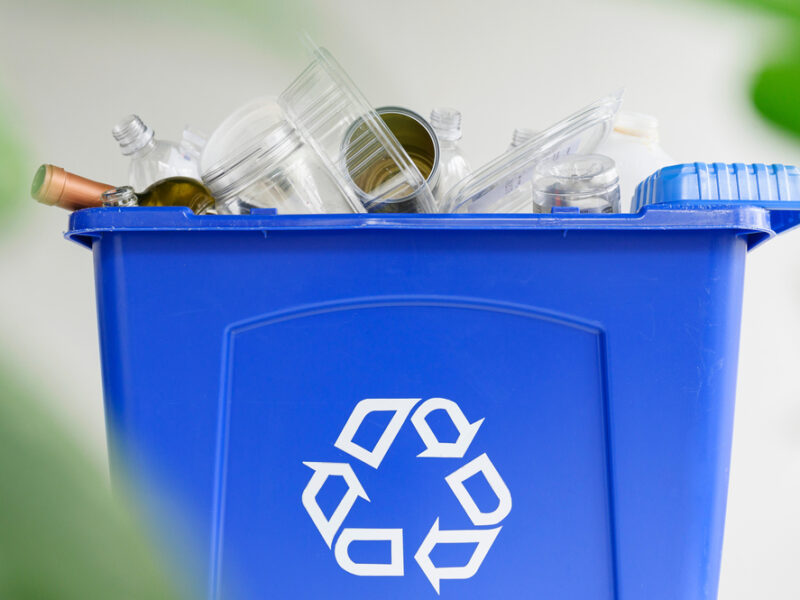
Plastic waste is a growing crisis worldwide, and plastic recycling in India has become a strategic imperative. India generates an estimated 10–11 million tonnes of plastic waste annually (over 25,000 tonnes per day) Only about 60% of this is collected for processing, and analysis finds just ~13% is actually recycled. Recognizing this, the government has rolled out new policies: the Plastic Waste Management Rules (2016, amended 2022) mandate extended producer responsibility (EPR) and increased recycled content, and a ban on many single-use plastics took effect in 2022. Digital initiatives – notably a CPCB‑run central EPR portal under the PM Gati Shakti “logistics” framework – are being introduced to track waste and compliance. On the funding side, ministers have announced one-time financial support for recycling startups and processing plants (including for abandoned fishing gear and high-litter plastic). Despite this push, India still sends a large share of its plastic to landfills or informal recycling. Recycling infrastructure is growing, but major gaps remain: nearly half of India’s plastic waste is mismanaged, and multi-layer and flexible plastics largely evade recycling.
Mechanical Recycling
Mechanical recycling remains the backbone of current recycling efforts. In this process, plastics are sorted, washed, shredded, and remelted into pellets for reuse. India and global companies are expanding capacity. For example, LyondellBasell and Shakti Plastic Industries recently signed an MoU to build a fully automated mechanical recycling plant in India, slated to begin operations by late 2024. The facility – touted as “the largest of its kind in the country” – will process post‑consumer rigid PE/PP packaging into recycled resin (about 50 tonnes per year). In this photo, Rahul Podaar (Shakti MD) and Yvonne van der Laan (LyondellBasell) sign the joint-venture agreement. LyondellBasell will market the recycled PE/PP under its Circulen® brand to Indian converters, meeting rising demand for PCR (post-consumer resin) materials. Other mechanical projects (often by petrochemical companies or plastics recyclers) focus on PET bottles and HDPE drums. However, mechanical recycling has limits: it works best for clean, single-polymer waste. Mixed films, multi-layer packaging, and dirty scrap cannot be easily recycled this way. To address this, advanced sorting (AI robotics) and improved EPR collection schemes are being developed, and some converters are investing in compatibilizer additives to blend mixed plastics. Overall, mechanical recycling converts only a fraction of waste – global estimates suggest <10% of plastic waste is recycled by value – so new methods are needed for the rest.
Chemical Recycling Technology
Chemical recycling (also called molecular recycling) is an emerging solution for hard-to-recycle plastics. Techniques include pyrolysis (thermally cracking mixed plastics into oils or gases), gasification, and solvolysis (using solvents or catalysts to depolymerize specific plastics, e.g., PET glycolysis). These approaches break plastics into their chemical building blocks, which can then be purified into virgin-quality feedstocks for new polymers or fuels. Recent innovations in India are notable. For instance, the Chandigarh startup PolyCycl has unveiled a continuous “ContiFlow Cracker” pyrolysis system combined with a purification unit (PyOilClean). This system converts single-use polyolefins (like films and bags) into liquified hydrocarbon oils, then refines them into clean petrochemical feedstocks. The result is circular polymers of food‐ and pharma‐grade quality – essentially virgin-equivalent resin – plus sustainable chemicals and fuel byproducts. Importantly, PolyCycl’s technology is modular (15–100 tonnes/day units) and cost-effective: it reportedly costs only 25–50% as much as comparable Western plants and yields ~50%+ EBITDA. This makes it commercially viable. In practice, PolyCycl claims 65–75% of input waste is converted to usable outputs.
India’s plastic waste profile makes such chemical recycling vital. Nearly 40% of India’s 10.2 Mt/yr plastic waste is lightweight film or single-use items (e.g., grocery bags) – fractions poorly handled by mechanical recycling. PolyCycl’s closed-loop system can handle these streams. By enabling “food-grade” recycled polymers, it directly supports India’s EPR targets of 10% recycled content in flexible packaging and 30% in rigid packaging by 2025-26. Other Indian enterprises (e.g., Exigo, Avani Bio Energy) are also piloting plastic-to-fuel plants, and global majors like ExxonMobil, BASF, and Mura are announcing large chemical recycling projects. In parallel, advanced research abroad (enzymatic PET depolymerization by Carbios, etc.) underscores that next-generation sustainable polymer innovations are on the horizon. A report forecasts the global advanced recycling market to grow ~20-fold by 2031 (to $9.45 billion), as technology improves and demand for high-quality recycled resin grows.
Advanced and Emerging Methods
Beyond pyrolysis, companies are exploring niche recycling routes. For example, enzymatic or microbial processes can selectively depolymerize certain plastics (PET or polyurethanes) under mild conditions. Dissolution-based technologies use solvents to extract polyolefins from complex waste. Novel catalysts and electric-based cracking reactors (e.g., Sweden’s Coolbrook RDR) are beginning to handle mixed waste streams and plastic‐derived oils. These methods promise to “close the loop” by turning end-of-life plastics into petrochemical feedstocks or new polymer resin without downcycling. However, they face hurdles: high capital costs, energy intensity, and still-evolving scales. In India, such processes are mostly at the pilot stage, though chemical companies and institutes are collaborating on demonstration units. Combined, mechanical, chemical, and emerging approaches create a multi-pronged recycling ecosystem.
Industry Partnerships and Government Initiatives
The plastics industry is actively forming partnerships to scale recycling. The LyondellBasell–Shakti JV is one example. Others include collaborations between consumer-goods companies, recyclers, and waste aggregators to secure feedstock. The government is helping: in September 2024, the Environment Ministry announced one-time grants to recycling startups and plant developers. The Central Pollution Control Board (CPCB) released guidelines (on International Coastal Cleanup Day 2024) for grants to process abandoned fishing nets and other difficult waste. Digital tools are also being deployed: the CPCB’s EPR portal (linked to PM Gati Shakti) creates a unified database of producers, recyclers, and waste flows, improving traceability. Moreover, flagship programs (Swachh Bharat, NIP infrastructure projects) indirectly support recycling by upgrading waste systems. Despite incentives, challenges remain – poor segregation and the informal sector dominance hinder large-scale investments. Still, sustained policy focus (EPR enforcement, recycled-content mandates) and corporate ESG goals are gradually boosting domestic recycling throughput and attracting international technology.
Do not compromise on quality or cost. Partner with Raj Industries for your next high-performance component project. Our deep material expertise, advanced manufacturing capabilities, and commitment to ISO 9001 quality ensure your designs are translated into reliable, high-precision plastic and rubber parts. Contact us today to discuss your specific requirements
and Request a Quote or Whatsapp